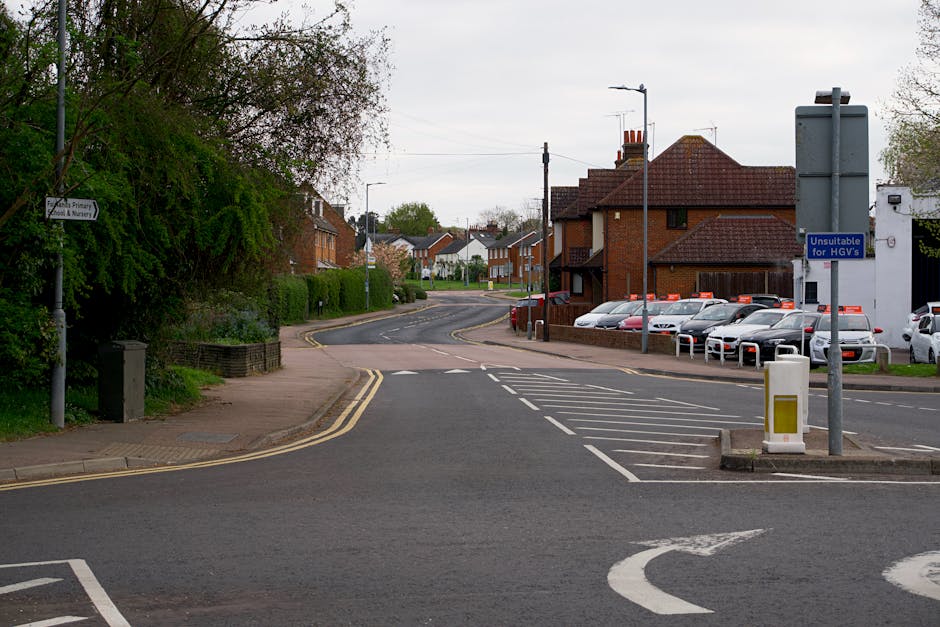
Avoid move-day fines: parking suspensions & permits in Slade Green
Posted on 02/06/2026
Avoid move-day fines: parking suspensions & permits in Slade Green
Moving day is stressful enough without coming back to a parking ticket on the windscreen. If you are planning a move in Slade Green, getting the parking side right can save time, money, and a lot of unnecessary panic. Avoid move-day fines: parking suspensions & permits in Slade Green means understanding when you need permission, how loading and waiting rules work, and what to do before the van arrives outside your door. A few minutes of planning can make the whole day feel calmer, cleaner, and far more controlled.
This guide breaks the subject down in plain English. You will learn how parking suspensions and permits usually work in a local move, which mistakes catch people out, and how to build a simple process that protects your schedule. If you are also sorting boxes, furniture, or awkward items, a little preparation goes a long way; our stress-free house moving blueprint and packing tips can help you line up the rest of the move too.
Truth be told, most move-day parking problems are not dramatic. They are small oversights: a bay is not suspended, a permit was never booked, the van blocks a dropped kerb, or someone assumes loading is always fine. That is where the fines creep in. Let's tidy that up now.

Why Avoid move-day fines: parking suspensions & permits in Slade Green Matters
Parking is not just a background detail on moving day. In practice, it decides whether the team can load quickly, whether fragile items stay safe, and whether your van spends the afternoon circling the block while everyone gets more and more fed up. In a place like Slade Green, where streets, residential bays, station-side access, and shared parking spaces can all create pinch points, the parking plan often matters as much as the packing plan.
A fine is the obvious risk, but it is not the only one. A blocked access route can slow down loading, increase carrying distance, and make it harder to move bulky furniture without damage. That extra distance might not sound like much until you are carrying a wardrobe, a mattress, or a piano case in the rain. A parked van in the wrong place can also upset neighbours or create avoidable conflict. Nobody wants a move day that turns into a low-level street drama before breakfast.
There is also a commercial side. If you are paying for removal help, delays can ripple through the whole booking. A 15-minute issue at the kerb can become an hour lost somewhere else. The better the parking arrangements, the more likely it is that the day stays efficient and, honestly, much less annoying.
If you are planning a bigger move, it is worth thinking about the whole chain: decluttering, packing, lifting, access, and parking. That is why guides like decluttering before you move and cleaning up before moving out fit naturally into the same planning stage. It all connects.
How Avoid move-day fines: parking suspensions & permits in Slade Green Works
At a practical level, parking suspensions and permits are about making sure the vehicle can stop as close as possible to the property without breaking local parking rules. In some streets, that means a temporary suspension of a bay or loading area. In others, it may mean using a visitor permit, a resident's visitor arrangement, or another form of parking authorisation where available. The exact process depends on the street, the parking controls in place, and whether the move is happening in a controlled zone.
Here is the simple version. First, identify the property's parking setup. Is there on-street parking only? Is there a controlled bay? Are there yellow lines, time restrictions, or a permit zone? Next, work out whether the van can legally stop for loading. Sometimes loading is allowed for a short period, but that does not mean you can leave a vehicle there indefinitely or block access. Then, if required, arrange the appropriate permit or suspension well ahead of the move.
For home removals, this becomes more important if you are moving from a flat, terrace, or a street with limited kerb space. Properties near station routes can be especially awkward, which is why a local guide like stairwell moving tips for Slade Green station flats can be helpful alongside parking planning.
One thing people often miss: even if you are not the one applying for the permit, the removal vehicle still needs space to work. If the van cannot get within a sensible carrying distance, the job takes longer and becomes more physically demanding. Not ideal. Not even close.
Key Benefits and Practical Advantages
Sorting the parking properly does more than stop fines. It gives the whole move a better shape.
- Closer loading distance: fewer trips, less strain, less chance of damage.
- Faster turnaround: the crew can work instead of waiting or re-parking.
- Lower risk of conflict: neighbours, delivery drivers, and passers-by are less likely to object.
- Better protection for furniture: short carries are simply easier on sofas, drawers, mirrors, and appliances.
- Less stress: you are not wondering whether a ticket is being written while you are upstairs with a box of mugs.
There is also a money-saving angle that is easy to overlook. A van that has to park further away may need more labour time, more carrying effort, or a second trip if the schedule slips. Avoiding a parking problem can therefore be part of controlling the overall moving cost, not just avoiding penalties.
When people ask what makes a move feel smooth, this is often the hidden answer: the property is ready, the route is clear, and the van can park where it needs to. Everything else gets easier from that point.
| Parking approach | Best for | Pros | Watch-outs |
|---|---|---|---|
| Street loading without a permit | Very short stops in unrestricted areas | Simple, quick, no admin if legal | Often not reliable in busier streets; loading rules still apply |
| Visitor or resident permit | Moves in permit-controlled streets | Usually gives a clearer legal basis for parking | May need advance arrangement and correct display |
| Parking suspension | When a bay must be reserved for the move | Creates dedicated space close to the property | Needs planning, timing, and confirmation before the day |
| Park-and-carry from further away | Low-risk, smaller loads, or no local controls | Can be flexible | More labour, slower move, greater handling risk |
Who This Is For and When It Makes Sense
This is for anyone moving in or out of Slade Green who does not want to gamble with parking. That includes households, renters, landlords arranging tenant changes, students with smaller loads, and businesses shifting stock or office furniture. It also matters if you are using a man with a van in Slade Green for a smaller move, because even compact moves can run into parking issues very quickly.
It makes sense especially when:
- the property is on a narrow residential street;
- you are moving from a flat or upper-floor home;
- street parking is already busy;
- there are yellow lines, timed restrictions, or permit bays nearby;
- you need the van close for heavy or awkward items;
- you are moving on a weekday morning or another busy period;
- you want to minimise the chance of delays, fines, or neighbour complaints.
A good rule of thumb: if you are even slightly unsure about the parking situation, do not leave it until the morning of the move. That is usually how people end up improvising, and improvising with a loaded van is never very elegant. It looks simple from the pavement. It usually isn't.
Step-by-Step Guidance
Here is a calm, practical way to handle the parking side of your move.
- Check the street outside both addresses. Look for permit bays, loading restrictions, yellow lines, time limits, and dropped kerbs. Do this for the old place and the new one.
- Ask what parking is usually available. If you are renting, the landlord, letting agent, or building manager may already know the local setup. A quick question can save a long headache.
- Measure the likely carry distance. If the van cannot park close, estimate how far the team will need to walk with boxes and furniture. A few extra metres is one thing; a long carry on stairs is another.
- Arrange permits or suspensions in good time. Do not leave this until the week of the move if you can avoid it. If a suspension is needed, build in time for approval and confirmation.
- Plan where the van will arrive and depart. If possible, choose the clearest side of the road and avoid awkward turning points. Think about how the van will pull away once loading is done.
- Communicate the plan. Tell everyone involved where to park, what time to arrive, and whether anything should be moved before the van gets there.
- Prepare the property for quicker loading. Pack, label, and clear corridors so the crew can work without bottlenecks. A little order saves a surprising amount of time.
If you are also still packing, use resources like better packing practices and packing and boxes support in Slade Green to keep everything aligned. Parking is one piece of the puzzle, but it works best when the rest of the move is already under control.
Expert Tips for Better Results
These are the small, practical habits that make a real difference.
- Build in slack time. If you need the van at 8:00, treat 8:00 as the start of the parking plan, not the exact loading moment.
- Have one person responsible. Too many people assuming "someone else sorted the permit" is how mistakes happen.
- Keep proof of arrangements handy. If a permit, booking, or confirmation exists, save it where you can find it quickly on the day.
- Think about the new property too. People often plan the old address and forget the new one, which can be just as awkward.
- Match the parking plan to the load. A sofa, bed frame, or piano is a different problem from a few boxes. For bigger items, closer parking matters more.
- Use a local mover who understands access issues. A team familiar with Slade Green is more likely to spot parking trouble before it becomes a problem. If you are comparing options, our services overview is a sensible place to understand how support is structured.
Expert summary: the cheapest parking plan is not always the best one. The best plan is the one that keeps the van legal, close, and ready to work without last-minute scrambling.
And yes, a little boredom in the planning stage is actually a good sign. It usually means the move itself will be a lot less chaotic.

Common Mistakes to Avoid
The usual mistakes are not glamorous. They are mundane, which is what makes them so irritating.
- Leaving permits until the last minute. That one is classic.
- Assuming loading is always allowed. Sometimes it is not, or not in the way you expect.
- Ignoring the new address. The arrival point matters just as much as the departure point.
- Not checking roadworks or temporary restrictions. Even a short-term change can throw everything off.
- Blocking neighbours' access. This can create complaints, and complaints tend to arrive just when you are carrying something heavy.
- Underestimating the carry distance. A van parked too far away turns a simple move into a long shuttle job.
- Forgetting building rules. Flats, estates, and managed properties can have their own parking instructions.
One small but common issue: people assume a van can just "pop on the pavement side for five minutes." In reality, five minutes has a habit of becoming twenty, and that is how the trouble starts. Nobody wants that awkward moment where everyone stands still and looks at the wheelie bin, wondering what to do next.
Tools, Resources and Recommendations
You do not need a complicated toolkit for this. You need a few reliable habits and the right moving support.
- A written move plan: a simple sheet with times, addresses, parking notes, contact names, and item priorities.
- Photos of the street: useful if you want to brief movers or compare the layout of both addresses.
- Labels and room notes: these reduce delays at both ends. Our move-out cleaning guide pairs well with this because a tidy property is easier to load.
- Proper packing supplies: strong boxes, tape, covers, and protectors keep the load moving efficiently. See packing and boxes in Slade Green for a practical next step.
- Professional moving support: if your move involves awkward furniture, stairs, or tight access, experienced help is worth serious consideration.
For larger or more awkward pieces, it can also help to read about furniture removals in Slade Green, piano removals, or why piano moving is more complex than you might think. Those jobs are exactly where parking and access become critical, not optional.
Law, Compliance, Standards, or Best Practice
Without drifting into legal jargon, the main point is straightforward: parking on public roads and in controlled areas must follow the local rules that apply to that street. That can include permit conditions, waiting restrictions, loading restrictions, dropped-kerb rules, and any temporary suspension notices. If a van parks where it should not, the risk is not just a ticket; it can also create access problems or complaints.
For move-day planning, best practice is to treat parking as a compliance task, not a casual assumption. That means checking the signs, understanding whether a short loading stop is actually allowed, and making sure any permit or suspension is confirmed before the van arrives. If you are in a managed block, the building's own access rules may matter too. Sometimes there are lift bookings, access windows, or parking instructions that sit alongside the street rules.
If you are arranging a business move, the standards are similar, but the pressure can be higher because timing matters more. Commercial movers often have less wiggle room. A small delay can affect staff, equipment, and opening hours. If that sounds familiar, tailored commercial removals advice may be useful in the wider planning process.
The safest stance is simple: if you are unsure, verify early. That is not overcautious. It is just sensible. And it saves money, which is usually enough to make the point.
Options, Methods, or Comparison Table
Here is a practical comparison of the main ways people handle move-day parking.
| Method | Typical effort | Cost impact | Risk level | Best use case |
|---|---|---|---|---|
| DIY parking check and on-the-day loading | Low upfront, higher on the day | Can be cheapest if everything goes perfectly | Medium to high if restrictions are missed | Small, simple moves in unrestricted streets |
| Permit-based planning | Moderate upfront | Usually predictable | Lower if the permit is correct | Homes in controlled parking areas |
| Parking suspension | Higher upfront planning | Can be worthwhile for time savings | Lower once confirmed | Busy streets, larger homes, heavy loads |
| Professional mover-led access planning | Low stress for the customer | May feel higher initially, often offset by efficiency | Lower if the team knows the area | Complex moves, flats, tight access, same-day jobs |
In many cases, the most practical option is not the fanciest one. It is the one that matches the property, the load, and the amount of time you actually have. That sounds obvious, but on moving day obvious things are often the first to disappear.
Case Study or Real-World Example
Picture a typical Saturday move in Slade Green. A family is leaving a two-bedroom home with a sofa, a bed, several boxes, and a dining table. At first, they assume the removal van can park just outside. The street looks quiet enough at 7:30 in the morning. But by the time the van arrives, another car has taken the nearest space and a neighbour's driveway leaves only a narrow gap. No one has arranged a permit, and the crew would need to carry everything a much longer distance than planned.
Instead of pushing ahead blindly, the team pauses, checks the options, and repositions the van to a more workable legal space nearby. It is not perfect, but it is manageable. The family has already labelled the boxes, cleared the hallway, and dismantled the bed. That preparation means the crew can still load efficiently even though the parking plan was not ideal. The move is slower than hoped, but it stays under control.
The lesson is plain: parking and preparation work together. If one is weak, the other has to work harder. If both are strong, the day usually feels easier, quieter, and more professional. And sometimes that quiet is the best thing you can buy.
Practical Checklist
Use this checklist a few days before your move.
- Check parking rules at both addresses.
- Confirm whether loading is allowed and for how long.
- Ask about permits, suspensions, or visitor arrangements.
- Save confirmation details in your phone and on paper.
- Tell the removal team where the van should stop.
- Keep the entrance, hallway, and stairs clear.
- Label heavy or urgent items clearly.
- Protect floors and doorways if needed.
- Make sure keys, fobs, and access codes are ready.
- Plan a backup parking option, just in case.
Quick takeaway: the more you can reduce uncertainty before the van arrives, the less chance there is of fines, friction, or unnecessary carrying. Simple as that.
If you want to make the whole day smoother, it can help to pair parking planning with the right moving support. Explore removal services in Slade Green, compare local removal companies, or check pricing and quotes early so the rest of the move is properly lined up.
Conclusion
Parking problems are one of those moving-day headaches that feel small right up until they cost you time or money. The good news is that they are very manageable. If you check the street, sort the right permit or suspension where needed, and give the van a realistic place to stop, you take a lot of pressure out of the day. That is what avoid move-day fines: parking suspensions & permits in Slade Green really means in practice: a calmer move, safer handling, and fewer surprises.
Whether you are moving a flat, a family home, or a business load, the same principle applies. Plan the parking first, then the rest of the move can breathe a bit. And if you are already feeling behind, do not beat yourself up. Most moves look messy from the start. The trick is to make them less messy by the time the van pulls up.
Get a free quote today and see how much you can save.
It is a small bit of planning with a very real payoff, and on moving day that kind of calm is worth a great deal.